OpenAI upgrades ChatGPT deep research with GPT-5.2 and new controls
Written by Joseph Nordqvist/February 10, 2026 at 11:11 PM UTC
3 min read
OpenAI has rolled out a set of upgrades to Deep Research in ChatGPT, including a new backend model and a more controllable research workflow.[1]
What changed
The biggest headline is that Deep Research is now powered by GPT-5.2, with OpenAI saying the update is rolling out starting today. Before, Deep Research used an o3-based backend.
Alongside the model upgrade, Deep Research now supports:
Searching specific sites (you can prioritize certain domains while still allowing full-web search)
Connecting to more apps inside ChatGPT and using them as trusted sources
Real-time progress tracking, with the ability to interrupt the run and add follow-ups or new sources
Fullscreen reports for easier reading and navigation
Why it matters
This is a pretty meaningful shift in how Deep Research behaves. Instead of being a “fire-and-forget” research agent, it’s moving toward a guided workflow: you can steer sources (site targeting + connected apps), watch what it’s doing, and correct course mid-run. For anyone using Deep Research for reporting, due diligence, or academic-style briefs, that control is the difference between “nice summary” and “repeatable research process.”
What it looked like in my testing
To see how the updated Deep Research workflow behaves in practice, I ran a simple test using FDA food recall guidance and restricted sources to a single government domain.
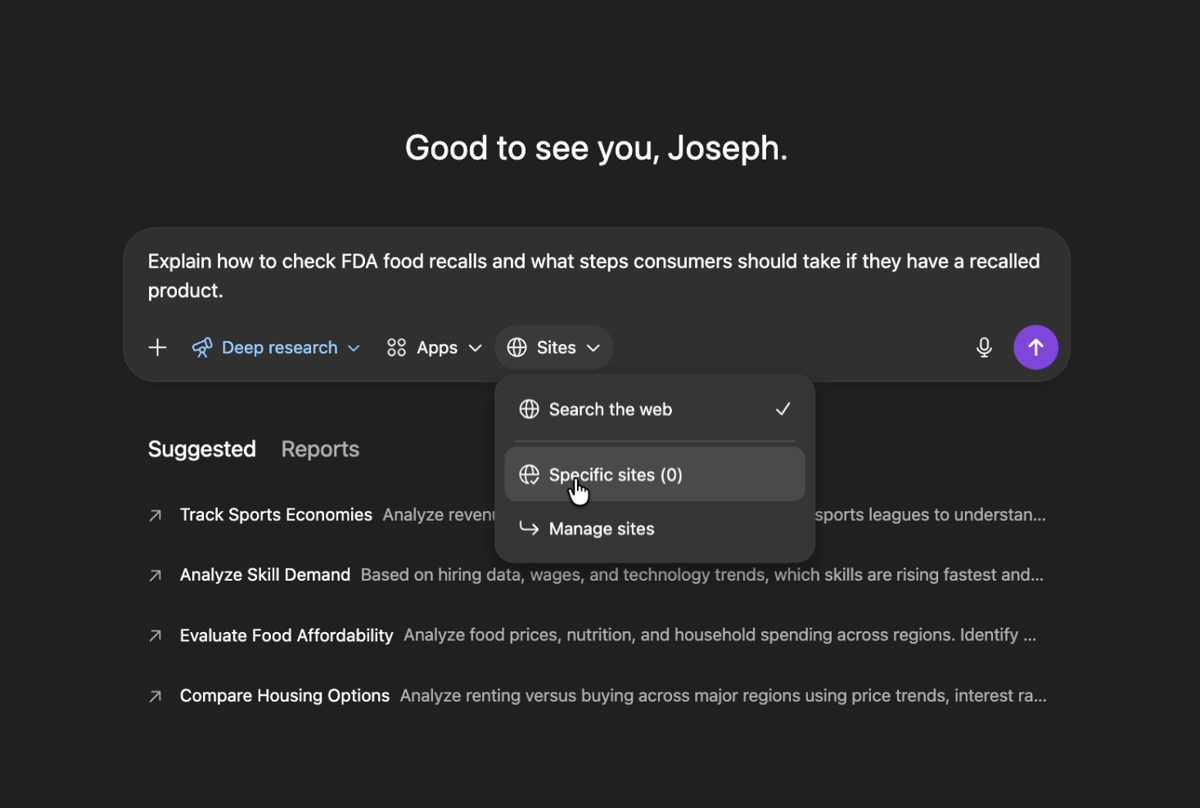
I switched Deep Research to “specific sites”
Inside ChatGPT, I opened the Sites selector and chose Specific sites rather than full web search. That makes it clear when the system is using a curated source set instead of browsing everything.
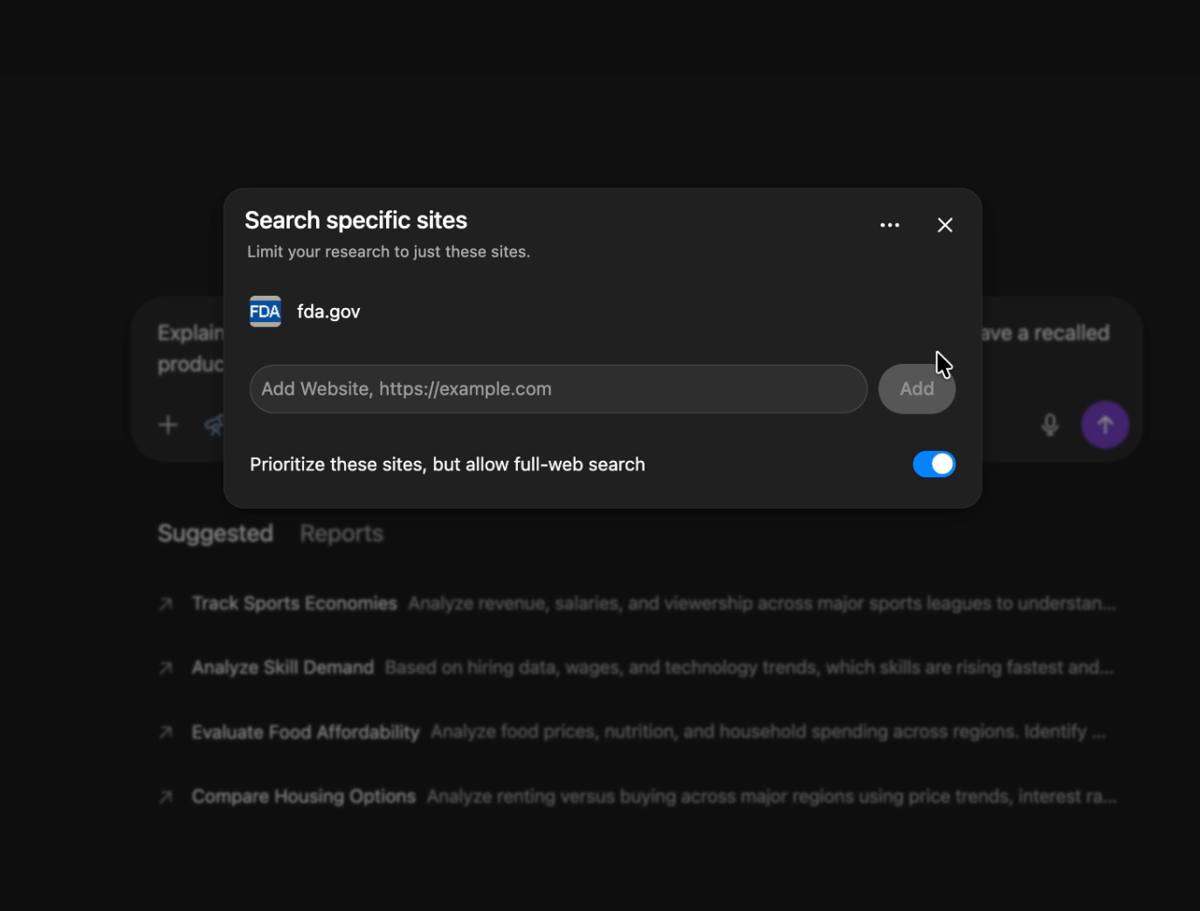
Next, I added the FDA official government website as the only “specific site” but also enabled the toggle to prioritize the site while still allowing full-web search. This is useful because it nudges Deep Research toward official sources first, without hard-blocking everything else.
I watched the live research activity while it worked
While the report ran, the live activity panel showed it actively searching across FDA-owned properties and datasets. In my run, it pulled from FDA’s main site plus related FDA domains, which is exactly what you want for an “official sources” test.
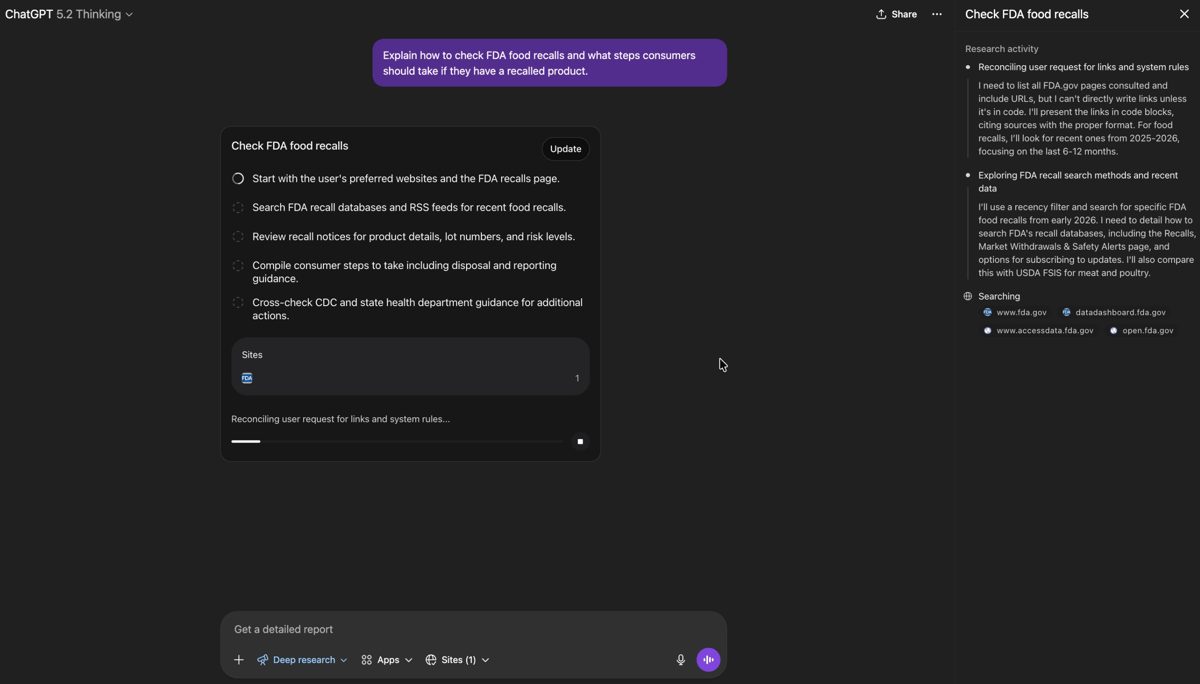
I adjusted the requirements of the deep research mid-research
During the run, I also tested the new mid-research steering. After Deep Research had already started gathering sources, I added an extra requirement in a follow-up message (asking it to include a TLDR and additional recall context). Instead of restarting from scratch, the system updated its research plan on the fly and continued with the new constraints, while the live activity panel kept running.
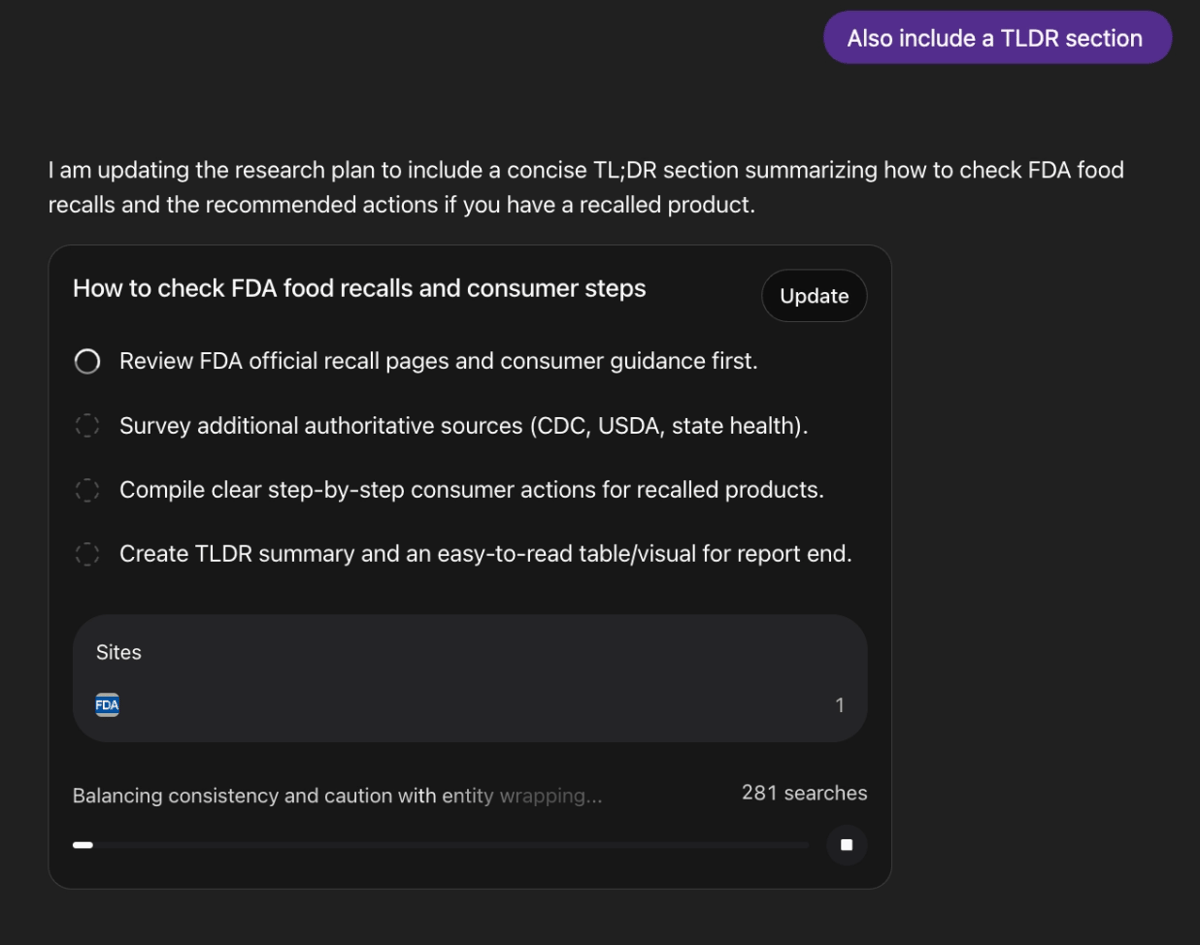
Once it finished, ChatGPT generated a report with a clear structure (including a TLDR section) and a high citation count. The report was viewable in a fullscreen format and presented like a standalone document, which makes it much easier to share, reference, or export.
In my test, the run completed with 43 citations after 336 searches, and the report UI made it easy to open and read as a self-contained document.

Editorial Transparency
This article was produced with the assistance of AI tools as part of our editorial workflow. All analysis, conclusions, and editorial decisions were made by human editors. Read our Editorial Guidelines
References
- 1.
Was this useful?
More in Products
View all- Alibaba launches Qwen 3.5 small model series with sub-1B edge optionsMarch 2, 2026
- Claude Code now remembers what it learns between sessionsFebruary 27, 2026
- Google launches Nano Banana 2, bringing pro-level image generation to its Flash modelFebruary 26, 2026
- Anthropic launches Remote Control for Claude Code, enabling mobile accessFebruary 25, 2026
Related stories
"Fast mode" for Claude Opus 4.6, 2.5x speed at 6x the price
A new "fast mode" for Claude Opus delivers up to 2.5 times higher output token generation speed at a significant premium: six times the standard.
February 8, 2026
ProductsOpenAI drops GPT-5.3-Codex right after Anthropic's Opus 4.6
February 6, 2026
ProductsAnthropic releases Claude Opus 4.6 with 1M context window
February 5, 2026
ProductsOpenAI releases standalone Codex app for macOS
OpenAI released a dedicated macOS application for Codex, its AI-powered coding assistant. The app is designed to serve as a "command center" that makes it easy for software developers to manage multiple AI agents at once.
February 2, 2026