Google DeepMind celebrates AlphaGo's 10th anniversary as Pentagon AI crisis consumes the industry
Written by Joseph Nordqvist/March 11, 2026 at 6:59 AM UTC
2 min read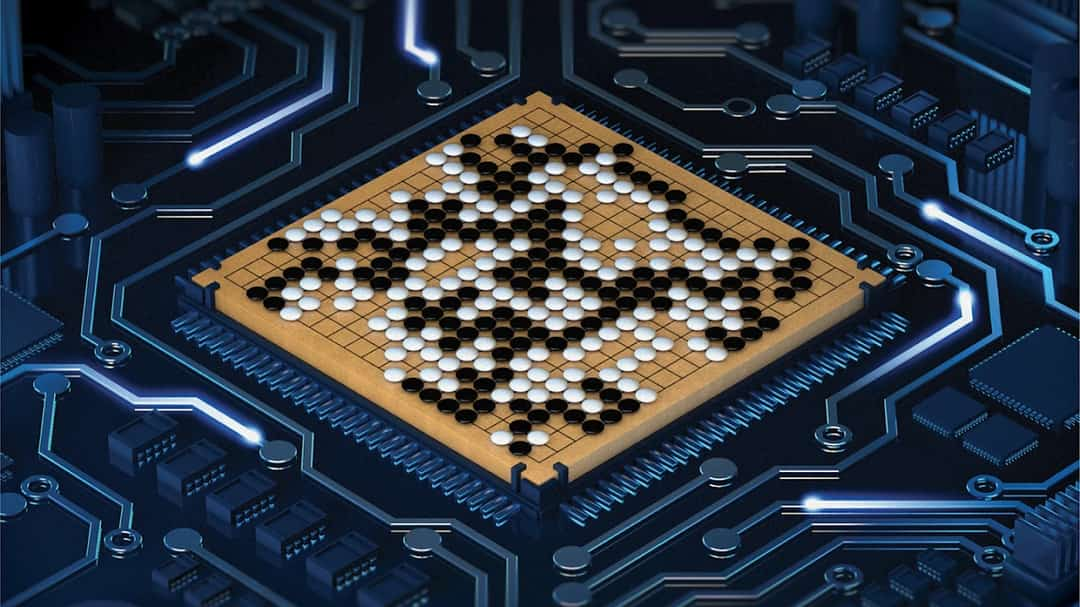
On Monday, as rival AI companies traded legal filings over Pentagon blacklists, employee revolts, and the question of whether AI should be used for mass surveillance, Google DeepMind CEO Demis Hassabis published a blog post about a board game.
The post marks the 10th anniversary of AlphaGo's defeat of world champion Lee Sae Dol in Go, an achievement Hassabis calls the beginning of "the modern era in artificial intelligence." It is warm, reflective, and carefully constructed. It traces a direct lineage from AlphaGo through AlphaFold's Nobel Prize-winning protein folding work, AlphaProof's mathematical reasoning, AlphaEvolve's algorithm discovery, and Gemini's Deep Think mode to what Hassabis frames as DeepMind's path to artificial general intelligence.
None of the technical claims in the post are new. Every result it cites (Deep Think's IMO gold medal from July 2025, AlphaEvolve's matrix multiplication breakthrough from May 2025, the AI co-scientist's antimicrobial resistance work with Imperial College London from February 2025) was previously announced and widely covered. The post consolidates them into a single narrative rather than breaking any news.
What makes the timing notable is everything happening around it.
The same day, on the other side of Google
Hours before Hassabis's retrospective went live, CNBC reported that Google was deepening its Pentagon AI partnership, introducing a tool called Agent Designer that would let the Defense Department's 3-million-plus workforce build custom AI agents on GenAI.mil, the military's enterprise AI portal. Talks are reportedly underway to expand from unclassified networks into classified and top-secret environments.
That expansion came one business day after Anthropic filed suit against the Trump administration for designating it a "supply-chain risk" (a label typically reserved for foreign adversaries) after the company refused to allow its AI to be used for mass surveillance of Americans or for autonomous weapons deployment without human authorization.
On Monday, more than 30 employees from OpenAI and Google DeepMind filed an amicus brief supporting Anthropic's lawsuit, warning the Pentagon's blacklist threatens the entire American AI industry. Among the signatories: Jeff Dean, Google DeepMind's own chief scientist.

Written by
Joseph Nordqvist
Joseph founded AI News Home in 2026. He studied marketing and later completed a postgraduate program in AI and machine learning (business applications) at UT Austin’s McCombs School of Business. He is now pursuing an MSc in Computer Science at the University of York.
View all articles →This article was written by the AI News Home editorial team with the assistance of AI-powered research and drafting tools. All analysis, conclusions, and editorial decisions were made by human editors. Read our Editorial Guidelines
References
- 1.
From games to biology and beyond: 10 years of AlphaGo's impact — Demis Hassabis, Google DeepMind, March 10, 2026
Primary - 2.
Google deepens Pentagon AI push after Anthropic sues Trump administration, CNBC, March 10, 2026
Primary - 3.
OpenAI and Google employees rush to Anthropic's defense in DOD lawsuit, TechCrunch, March 9, 2026
Primary - 4.
Google and OpenAI employees back Anthropic in its legal fight with the Pentagon, Fortune, March 10, 2026
- 5.
Anthropic Has Brought Something New to AI. The Power to Say No — Parmy Olson, Bloomberg, March 10, 2026
- 6.
Gemini for Government: Build custom AI agents for unclassified work on GenAI.mil, Google Cloud, March 10, 2026
- 7.
Pentagon says employees can create their own 'custom AI assistants' with new tech, DefenseScoop, March 10, 2026
- 8.
- 9.
- 10.
Google's AI co-scientist could enhance research, say Imperial researchers, Imperial College London, February 19, 2025
- 11.
Was this useful?