How ChatGPT and AlphaFold helped an Australian engineer design a personalized cancer vaccine for his dog
Written by Joseph Nordqvist/March 16, 2026 at 3:38 AM UTC
6 min read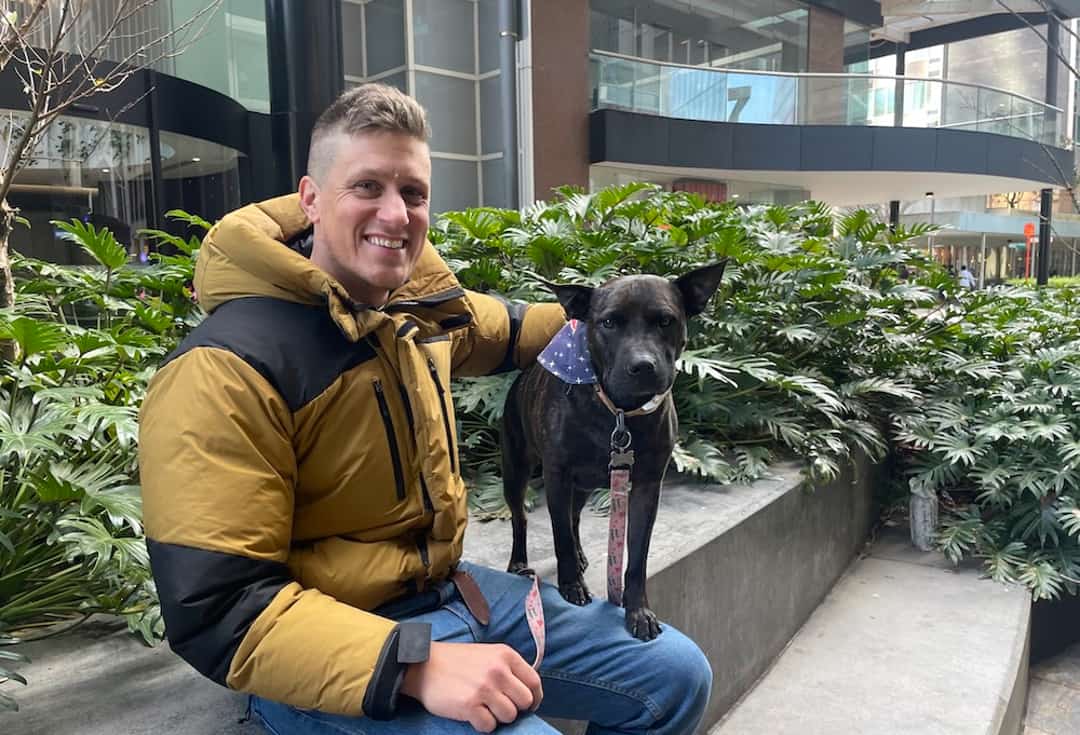
Paul Conyngham, a Sydney tech entrepreneur with no background in biology, used ChatGPT, Google DeepMind's AlphaFold, and his own machine learning expertise to design a custom mRNA cancer vaccine for his rescue dog.
Scientists at two Australian universities then manufactured and administered it. One of the dog's tumors shrank by roughly half.
The story, originally reported by Natasha Bita in The Australian on March 13, went viral over the weekend after OpenAI co-founder Greg Brockman shared it on X, describing it as "the first personalized cancer vaccine designed for a dog."[1][2]
But several important details have been lost in the retelling. Among them: the vaccine was not the only treatment the dog received, the true cost of the project is higher than the widely cited $3,000 figure, and personalized mRNA cancer vaccines are already in late-stage human clinical trials.
The scientist who synthesized the vaccine has publicly flagged all of these points.[3]
The story, briefly
Conyngham, co-founder of Sydney consultancy Core Intelligence Technologies and a former director of the Data Science and AI Association of Australia, adopted Rosie, a Staffordshire Bull Terrier-Shar Pei cross, from a shelter in 2019. She was diagnosed with mast cell cancer in 2024. Chemotherapy and surgery slowed but did not shrink the tumors.
Conyngham, who has many years of experience in data analysis, used ChatGPT to brainstorm treatment options. The chatbot suggested immunotherapy and directed him to the UNSW Ramaciotti Centre for Genomics, where he paid $3,000 for DNA sequencing. He then ran the data through multiple analysis pipelines, used AlphaFold to identify mutated proteins, and matched them to potential drug targets using his own algorithms.
Martin Smith, director of the Ramaciotti Centre, introduced Conyngham to Pall Thordarson, director of the UNSW RNA Institute, who synthesized a bespoke mRNA vaccine from Conyngham's data. Rachel Allavena, a canine immunotherapy professor at the University of Queensland, administered the treatment under existing ethics approval. Conyngham drove 10 hours with Rosie for her first injection in December 2025.
What most coverage missed
The story went viral as a straightforward narrative: man uses AI to save dying dog from cancer.
Thordarson, the scientist who actually made the vaccine, pushed back the same day. In an eight-post thread on X responding to Brockman's post, he laid out several nuances that significantly change the picture.[3]
The vaccine was not the only treatment. Thordarson wrote that the treatment required co-administration of a checkpoint inhibitor, a type of drug that releases the brakes on the immune system so it can attack cancer cells. He added that this would likely be the case with all personalized cancer vaccines.[3]
The real cost is unknown and "quite high." Thordarson stated that the $3,000 sequencing fee Conyngham has cited does not reflect the true expense. The scientists contributed substantial in-kind time and laboratory resources, and the checkpoint inhibitor adds further cost. "It is difficult to estimate real cost in research projects as we all put in a lot of inkind time and resources," he wrote.[4]
Not all tumors responded. While one tumor shrank substantially, at least one other did not respond to the treatment. Smith is now investigating whether the non-responding tumors mutated differently. Conyngham is working on a second vaccine to target the resistant tumor.[4]
This is a research project, not a proven treatment. Thordarson described it as such and said the team hopes to publish their findings.[4] No peer-reviewed paper or preprint has been released as of this writing.
Thordarson also cautioned directly: "This may not have cured Rosie; bought time for sure yes but some of the tumours didn't respond."[4]
Brockman, to his credit, replied to Thordarson's thread: "thank you for your work on this, and for the extra nuance!"
What AI actually did
The social media framing that "AI created a cancer vaccine" compresses a multi-step, multi-party process into a misleading shorthand.
ChatGPT's role was as a research assistant. It helped Conyngham brainstorm treatment strategies, pointed him to relevant institutions, and assisted in interpreting genetic data.
AlphaFold's role was more technically specific. It predicted protein structures from Rosie's mutated genes, which helped identify which mutations might be viable treatment targets.
Conyngham's own contribution was substantial. He wrote custom algorithms to match mutations to drug candidates and to inform the mRNA sequence design. Conyngham is a 17-year veteran of machine learning and data science.
The scientists' contribution was essential. Thordarson's lab synthesized the physical vaccine. Smith's center performed the genomic sequencing. Allavena's team administered the treatment under ethics approval. None of these steps were performed by AI.
What AI did do is compress the early-stage research pipeline. Literature review, treatment brainstorming, and genomic analysis that might otherwise have taken months were accelerated significantly. Thordarson completed the vaccine in under two months from the point Conyngham delivered his sequence.
What comes next
Conyngham has said he is now sequencing the resistant tumor to understand why it did not respond. He has shared a form on social media for dog owners interested in the treatment.
Thordarson, in his thread, argued that genomic analysis and RNA production could increasingly become standardized services as automation improves. He compared the potential shift to what happened in Australian energy production, where millions of homeowners with solar panels disrupted a system previously dominated by a handful of large generators.[3]
He raised the question of whether pharmaceutical regulation needs to be rethought for a world where end users can design their own therapeutic candidates, and whether publicly funded health systems like Australia's could ensure equitable access to personalized medicine.[3]
His closing line: "In pharma, personalised human medicines a la Rosie, designed by the end-user will happen. We need to start now talking about how we want to manage this."[3]

Written by
Joseph Nordqvist
Joseph founded AI News Home in 2026. He studied marketing and later completed a postgraduate program in AI and machine learning (business applications) at UT Austin’s McCombs School of Business. He is now pursuing an MSc in Computer Science at the University of York.
View all articles →This article was written by the AI News Home editorial team with the assistance of AI-powered research and drafting tools. All analysis, conclusions, and editorial decisions were made by human editors. Read our Editorial Guidelines
References
- 1.
Greg Brockman post on Rosie's mRNA vaccine — Greg Brockman, X, March 14, 2026
OpenAI co-founder's post that helped the story go viral. Referenced as [1] and [2] (reply to Thordarson).
- 2.
Tech boss uses AI and ChatGPT to create cancer vaccine for his dying dog — Natasha Bita, The Australian, March 13, 2026
Original exclusive report. Referenced as [3].
Primary - 3.
First-person thread providing critical nuances: checkpoint inhibitor, cost, publication plans, non-responding tumors, regulatory questions. Referenced as [4].
Primary - 4.
Form for interested dog owners. Referenced as [9].
- 5.
Was this useful?