Inside Microsoft’s Maia 200: Why This Chip Matters More Than You Think
Written by Joseph Nordqvist/January 27, 2026 at 11:40 PM UTC
5 min read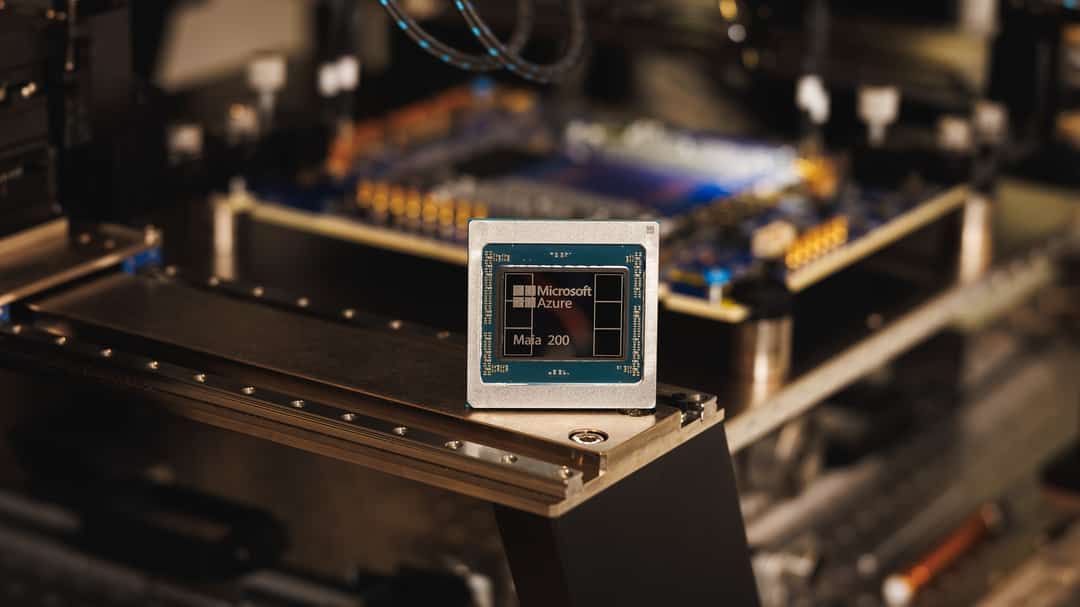
On January 26, 2026, Microsoft quietly dropped a big bet on a future many industry insiders predicted but few expected this soon[1]: a custom chip designed explicitly to accelerate AI inference at massive scale.
The Maia 200 is a strategic inflection point in how we think about cloud AI infrastructure, costs, global competition, and even the environmental footprint of AI.
Let’s unpack why this matters beyond performance numbers.
A New Strategic Frontier: Inference
Most headlines about AI chips obsess over training — the dramatic process of teaching models like GPT to understand language. But a very real economic battleground today is inference. That’s the everyday work of answering prompts, powering assistants, translating languages, and generating images. It’s the part where billions of API calls happen each day, and it dominates the ongoing cost of operating AI services.
Maia 200 was architected with that in mind, as a purpose-built inference engine. Early performance figures suggest it outpaces Amazon’s Trainium 3 and even Google’s latest TPUs in key efficiency metrics. That’s a serious statement given how entrenched those rivals are.
This focus reflects a broader industry shift: companies are optimizing not just for raw compute, but for performance per dollar and per watt — critical metrics when you’re running millions of inference calls daily.
A Cloud Strategic Weapon
Integration with Azure
Unlike generic hardware that any customer can rent, Maia is deeply tied into the Azure ecosystem, from 365 Copilot to backend services and the internal “Superintelligence” teams. That lets Microsoft tune performance at every layer: hardware, software, and applications.
Why this matters: It mirrors Apple’s strategy in mobile: control the chip and you control the experience. The result could be lower latency and better real-world responsiveness for AI features baked into Microsoft products.
Performance Is Only One Part of the Equation
Yes, Maia 200 claims a performance edge in FP4/FP8 workloads, but it also brings a new memory and networking architecture that’s optimized for large models and low latency. Efficiency on memory access and data movement — often the unsung bottleneck in AI — is now front and center.
That’s important because the next generation of AI models is not just bigger — they’re context-rich. They demand longer contexts, more reasoning steps, and more interaction with external data sources. Efficient inference chips help make that less costly and more scalable.
A Competitive Upset
There’s been talk that Maia could end Nvidia’s dominance. That’s overstated. Nvidia’s GPUs still lead in raw flexibility, have a massive ecosystem, and remain the standard for training and general-purpose AI workloads. Nvidia’s stock even ticked up after the Maia launch, partly because investors recognized rising AI compute spending benefits them too.
Instead, the real impact of Maia is strategic diversification:
Hyperscalers want independence: Microsoft, Google, and Amazon are all pushing custom silicon precisely because being sole customers of one supplier is a business risk.
Specialization wins for specific workloads: Inference chips like Maia win when the goal isn’t general compute — it’s scale, cost, and efficiency at massive volumes.
Software and tooling matter more than ever: If Maia doesn’t have strong developer support and optimization tools, its performance advantages won’t fully materialize in real applications.
So while Nvidia’s dominance isn’t over, the shape of competition is changing — from a one-horse race to a multi-axis battlefield.
Markets, Policy, and Global Competition
Here’s a layer most coverage glosses over: the geopolitical and economic implications of custom AI silicon.
Supply chains matter: With most advanced chips coming from Taiwan Semiconductor (TSMC), tensions in global semiconductor logistics affect everyone. Custom chips give cloud players more leverage and potentially more resilience.
Competition policy is waking up: Economists and regulators are starting to debate how much concentration in AI compute markets is healthy. If a few companies own both the hardware and the models that run on them, policymakers may intervene.
What Happens Next?
Here’s where things get interesting:
Will Microsoft make Maia available to external customers? Right now, it’s mostly internal to Azure. Opening it up could accelerate adoption and software ecosystem growth.
Can Amazon and Google respond? Trainium 3 and TPU v7 are strong moves — but Microsoft’s tight integration might give it an edge for certain enterprise scenarios.
Does this accelerate decarbonization efforts? Efficient inference chips could reduce overall energy demands — which is huge given how power-hungry AI data centers already are.
Bottom Line
Whether you’re a developer, investor, or AI enthusiast, this isn’t just about faster chips. It’s about a strategic pivot in how AI gets built, run, and monetized:
Performance advantages still matter — but efficiency and integration matter more.
The AI chip landscape is moving from monopolistic to competitive — and that’s good for innovation.
Microsoft’s bet isn’t that Nvidia will fade — it’s that hybrid compute ecosystems will win.
And if that becomes the norm, we may look back at the launch of Maia 200 as the day cloud AI infrastructure entered a new era of specialization.

Written by
Joseph Nordqvist
Joseph founded AI News Home in 2026. He studied marketing and later completed a postgraduate program in AI and machine learning (business applications) at UT Austin’s McCombs School of Business. He is now pursuing an MSc in Computer Science at the University of York.
This article was written by the AI News Home editorial team with the assistance of AI-powered research and drafting tools. All analysis, conclusions, and editorial decisions were made by human editors. Read our Editorial Guidelines
References
- 1.
Maia 200: The AI accelerator built for inference — Scott Guthrie, Microsoft, January 26, 2026
Primary
Was this useful?
Related
OpenAI shares Pentagon contract language
February 28, 2026
OpenAI strikes Pentagon deal hours after Anthropic blacklisted — with seemingly the same terms Anthropic was punished for requesting
February 28, 2026
Amazon invests $50 billion in OpenAI as part of $110 billion funding round
February 27, 2026
The Pentagon wants Claude without guardrails. Anthropic said no. Here's where it stands
February 27, 2026