OpenAI releases standalone Codex app for macOS
Written by Joseph Nordqvist/February 2, 2026 at 10:14 PM UTC
5 min read
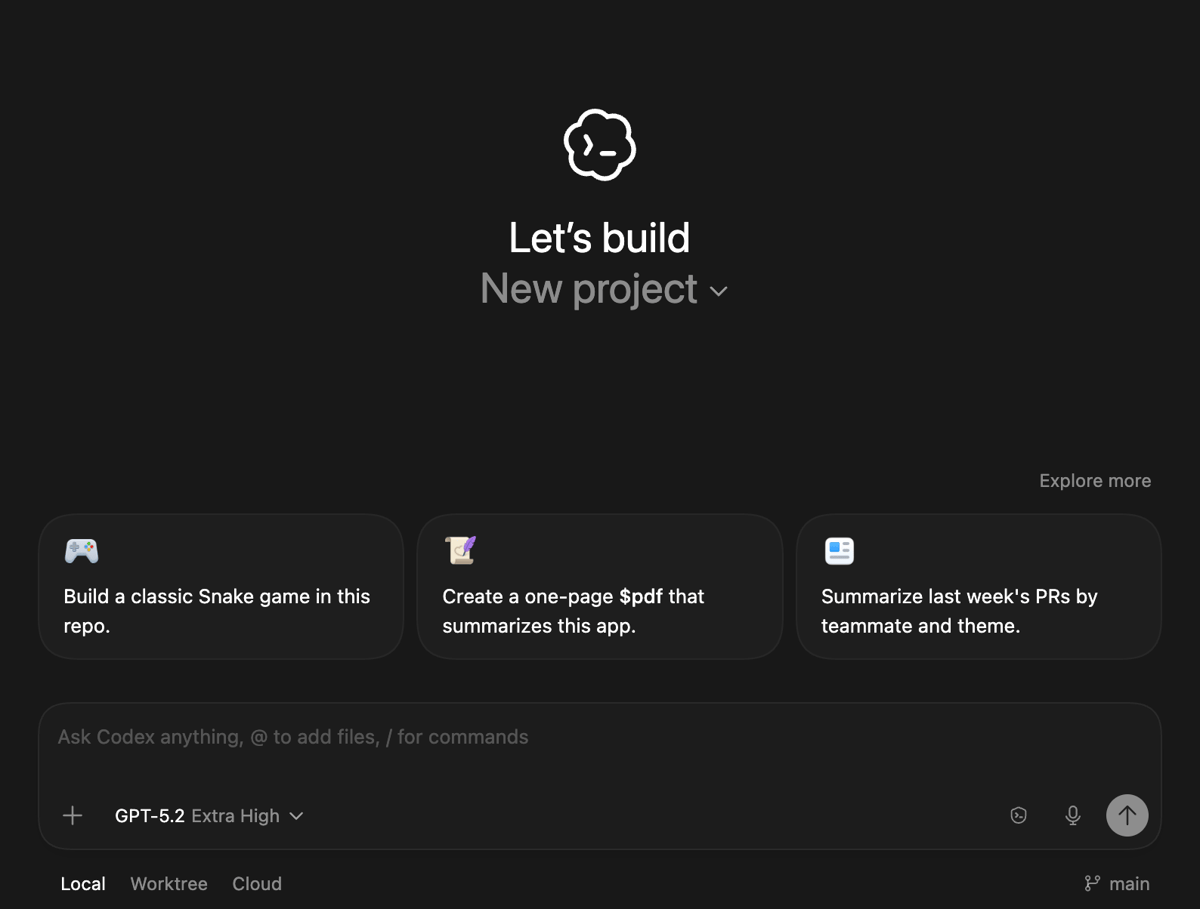
OpenAI released a dedicated macOS application for Codex, its AI-powered coding assistant.[1] The app is designed to serve as a "command center" that makes it easy for software developers to manage multiple AI agents at once. The release marks OpenAI's first standalone desktop application for developer tools, separate from its existing ChatGPT app.
Context and Background
OpenAI first launched Codex in April 2025 before making it generally available in October. Until now, developers accessed Codex through a command-line interface, web interface, or IDE extensions.
The AI coding tools market has grown substantially over the past year. OpenAI describes Codex as its entry into competition with Anthropic's Claude Code, which the company says currently holds a strong position in the AI coding market. Cursor, another competitor, has also built a significant user base among developers.
Key Details
The Codex app is currently only available for macOS with Apple Silicon processors. OpenAI has not announced a release date for Windows or Linux versions, though users can sign up to be notified.
Within the app, agents run in separate threads organized by project, and users can review the agents' changes within those threads. The agents can run in parallel, and developers can collaborate with them as they work on long-running tasks.
The app introduces "skills," which are special folders containing instructions, scripts, and resources that agents can use to perform specialized tasks like automated code reviews. Users can create custom skills or use pre-built options. An automations feature allows users to schedule recurring tasks that run in the background.
Access to Codex is included with ChatGPT subscriptions, meaning Plus, Pro, Business, Enterprise, or Edu subscribers can use it and purchase additional credits as needed. For a limited time, OpenAI is also making Codex available to Free and Go tier users, and is temporarily doubling rate limits for all paid plans.
More than a million developers have used Codex in the past month, and usage has nearly doubled since the launch of GPT-5.2-Codex in mid-December. Enterprise customers include Cisco, Ramp, Virgin Atlantic, Vanta, Duolingo, and Gap.
Sam Altman, OpenAI's chief executive, said the Codex app is "the most loved internal product we've ever had" during a press briefing.[2]
Why This Matters
The release of a standalone desktop application signals that OpenAI views developer tools as a distinct product category rather than simply a feature within ChatGPT. The ability to manage multiple AI agents working in parallel represents a shift in how coding assistants function, moving from single-task completion toward coordinating broader development workflows.
For developers, the practical question is whether this approach proves more effective than existing tools like Cursor or Claude Code for their particular workflows. The temporary free access period gives users a chance to evaluate the tool before committing to a paid subscription.
Outlook (Uncertain)
OpenAI has indicated plans to release the app on Windows and expand Codex's capabilities, though specific timelines have not been announced. According to a recent survey of 100 Global 2000 companies by Andreessen Horowitz, 78% of enterprise CIOs now use OpenAI models in production, though Anthropic has grown 25% in enterprise penetration since May 2025, with 44% of enterprises now using Anthropic in production.[3] How this competitive landscape evolves in the developer tools segment specifically remains unclear.

Editorial Transparency
This article was produced with the assistance of AI tools as part of our editorial workflow. All analysis, conclusions, and editorial decisions were made by human editors. Read our Editorial Guidelines
References
- 1.
- 2.
- 3.
OpenAI launches a Codex desktop app for macOS to run multiple AI coding agents in parallel — Michael Nuñez, VentureBeat, February 2, 2026
Was this useful?
More in Products
View all- Alibaba launches Qwen 3.5 small model series with sub-1B edge optionsMarch 2, 2026
- Claude Code now remembers what it learns between sessionsFebruary 27, 2026
- Google launches Nano Banana 2, bringing pro-level image generation to its Flash modelFebruary 26, 2026
- Anthropic launches Remote Control for Claude Code, enabling mobile accessFebruary 25, 2026
Related stories
OpenAI upgrades ChatGPT deep research with GPT-5.2 and new controls
February 10, 2026
Models"Fast mode" for Claude Opus 4.6, 2.5x speed at 6x the price
A new "fast mode" for Claude Opus delivers up to 2.5 times higher output token generation speed at a significant premium: six times the standard.
February 8, 2026
ProductsOpenAI drops GPT-5.3-Codex right after Anthropic's Opus 4.6
February 6, 2026
ProductsAnthropic releases Claude Opus 4.6 with 1M context window
February 5, 2026